
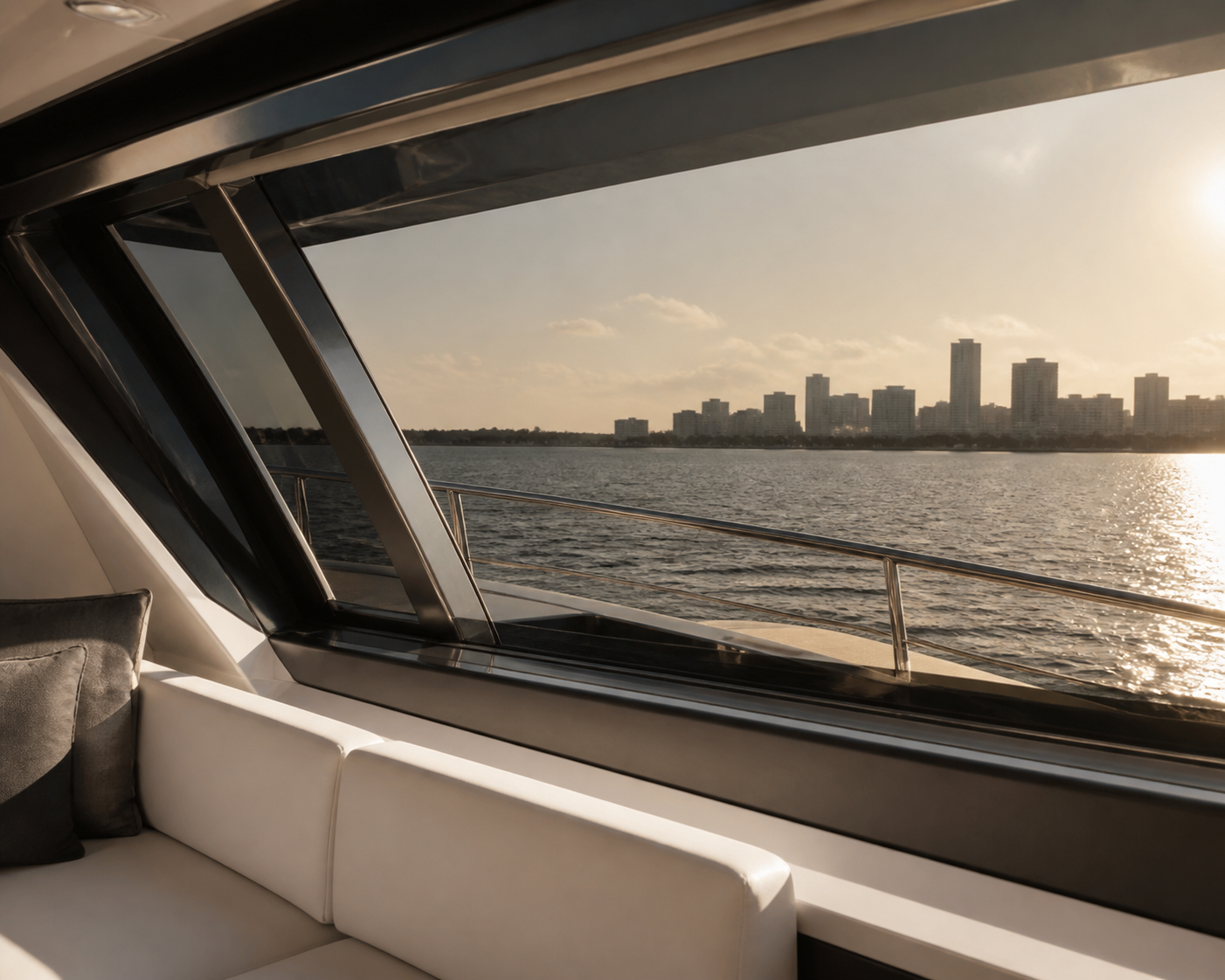
Miami sun on the water is beautiful right up until the glare finds every screen, seat, and pair of sunglasses on board. Marine window film can help improve cabin comfort and visual ease, but boats, yachts, and marine glass deserve a more careful conversation than a standard automotive install.
The water changes the tint conversation
A vessel deals with direct sun, reflected light, changing sightlines, humidity, and a demanding environment around seals and frames. The right marine film must be considered around the glass type, window shape, visibility needs, and how the boat is used. A cabin cruiser, yacht, fishing boat, and center console may have very different priorities.
Falcones starts by understanding the vessel and the areas that create the most discomfort. Is it the helm? The salon? Side windows? Cabin doors? A few well-defined pain points make it easier to identify a useful film direction.
- Helm glare and screen visibility
- Cabin heat, privacy, and interior comfort
- Glass shape, framing, seals, and access for a clean installation
Visibility always belongs in the plan
On a boat, a tint decision cannot be only about shade and style. Safe, comfortable visibility has to stay central to the conversation. The intended use, time of day, and position of the glass all matter, especially around the helm and areas that support navigation.
Film options can be reviewed for glare control, comfort, exterior appearance, and privacy while keeping the job grounded in the way the vessel is operated. This is not the place for a dramatic look that makes the skipper regret it when the sky turns gray.
Prepare for a better marine tint quote
Share the boat type, photos from inside and outside, a rough count of windows, and the areas where sun or glare is most disruptive. Mention the marina or location, access details, and whether the work needs to fit around a launch, charter, or service schedule.
A clear scope helps Falcones advise on the project efficiently and helps you compare options with confidence. Marine glass is too visible, and too important, for a vague plan.
- Do photograph the helm and each troublesome glass area
- Do share the vessel's typical use and visibility priorities
- Do not apply household or automotive assumptions to every marine glass surface
Questions Falcones hears often
Can boat window tint help with glare?
Marine film can be discussed as part of a glare and comfort strategy, especially for cabins and other glass areas. Visibility at the helm and the way the vessel is operated must remain central to the selection.
What should I send for a marine tint estimate?
Photos, the vessel type, a rough window count, the problem areas, location or marina access, and the desired timeline give Falcones a useful starting brief.